Portion Control
How to Prevent Overeating with Automatic Cat Feeders
Use the feeder to create a clear routine, not as a substitute for monitoring, veterinary guidance, or fair food access.
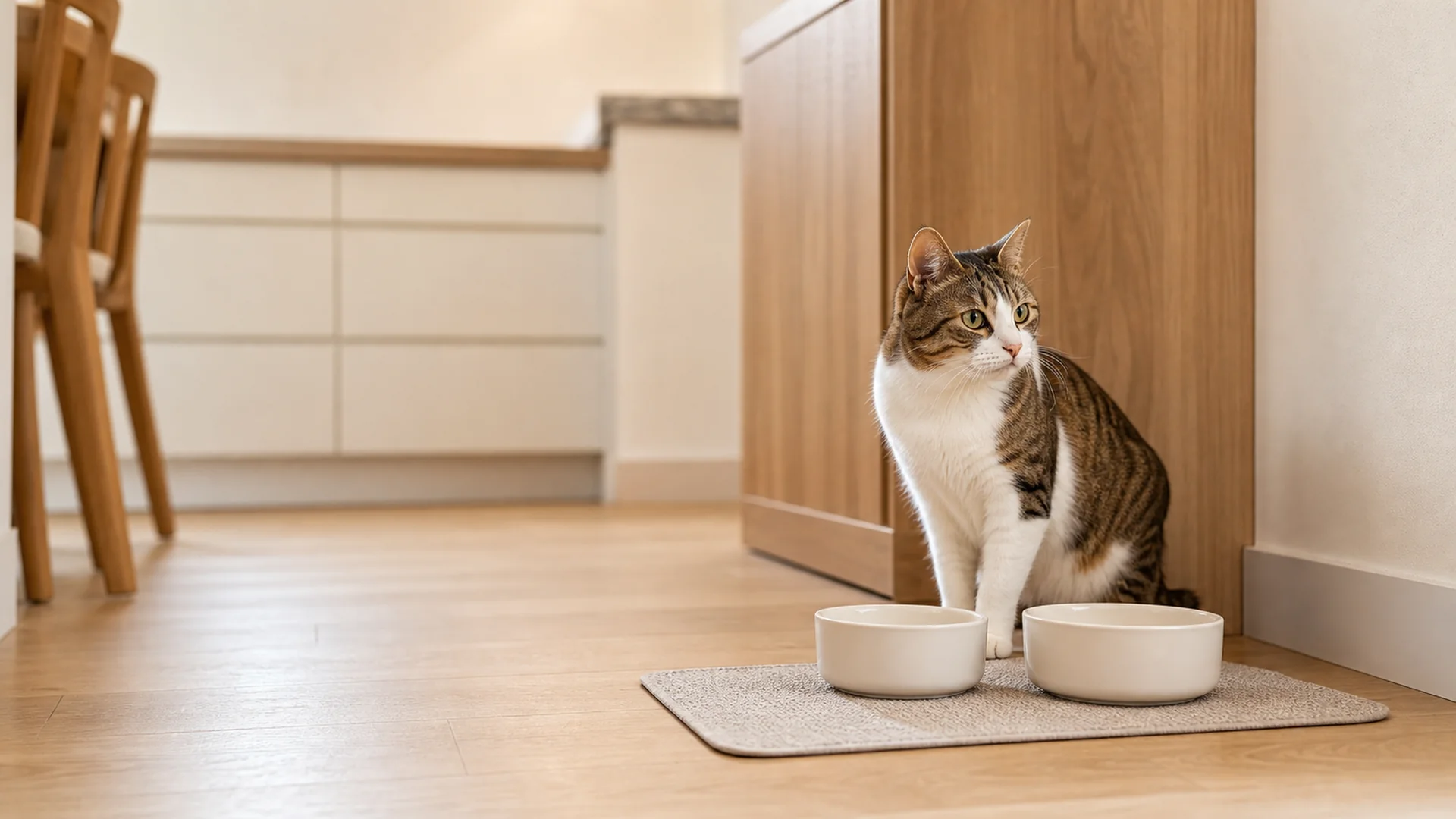
Quick answer
Automatic feeders can help reduce overeating by limiting access to measured, scheduled meals. The routine works only when you test the feeder's real output, remove extra food access, monitor leftovers, and make sure the intended cat receives each portion.
- Schedule access instead of leaving food available all day.
- Test the actual portion dispensed with your cat's kibble.
- Use separate feeding areas when one cat steals food.
- Ask a veterinarian about weight change, medical diets, or sudden appetite shifts.
Build a safer portion-control routine
Start with the total daily routine
A feeder can organize meals, but it cannot determine the right daily intake for every cat.
- Use the food label and veterinary guidance as your starting point.
- Do not add automatic meals on top of unmeasured snacks.
- Keep treats and table food in the same daily calculation.
Split access into predictable meals
Scheduled portions can reduce all-day grazing and make the feeding pattern easier to observe.
- Use consistent times rather than frequent random releases.
- Smaller scheduled meals may help some cats feel less urgency around food.
- Avoid changing the full schedule too quickly.
Test the feeder's real output
The setting on the screen may not match the exact amount dispensed with every kibble shape or size.
- Run several test portions before relying on the feeder.
- Measure the actual output with the food you plan to use.
- Recheck after changing kibble or cleaning the mechanism.
Remove extra access to food
A precise feeder cannot prevent overeating if food remains available elsewhere in the home.
- Store bags and refill containers securely.
- Keep backup bowls empty unless they are part of the plan.
- Make sure other household members know the schedule.
Treat multi-cat homes separately
One cat may eat the programmed portion while another receives too little.
- Observe which cat reaches the feeder first.
- Use separate stations when cats compete.
- Consider protected access when diets or body-condition goals differ.
Add activity without using food as the only tool
Overeating routines can be influenced by boredom, competition, habit, or a lack of environmental stimulation.
- Use play and enrichment alongside a consistent feeding schedule.
- Avoid responding to every request for attention with food.
- Keep changes calm and gradual rather than restrictive or punitive.
What to monitor after changing the schedule
Watch which cat reaches the feeder, how much food remains, whether the mechanism dispenses consistently, and whether your cat's appetite or behavior changes. The purpose of automation is to make the routine clearer, not less visible.
Recheck the setup after changing kibble, moving the feeder, cleaning the hopper, or adding a second cat to the routine. Small mechanical or household changes can affect actual access.
Automatic feeder and overeating FAQ
Can an automatic feeder stop a cat from overeating?
It can help control timing and access, but it does not solve every cause of overeating. The total daily routine, food stealing, treats, activity, health, and appetite changes still need attention.
Should I schedule many small meals?
Some cats do well with smaller scheduled meals, but there is no universal number that fits every cat. Choose a pattern that matches your veterinarian's guidance, the food type, and your ability to monitor the routine.
Why is my cat still hungry after using a feeder?
Hunger-like behavior can come from habit, competition, boredom, food preferences, or a medical issue. Do not assume the feeder setting is the only cause, especially when appetite changes suddenly.
Can one feeder work for two cats?
Only when both cats have fair access and similar feeding needs. If one cat eats faster or guards the feeder, separate or protected feeding is usually more reliable.
Can a feeder help with a veterinarian-approved weight plan?
It can support consistency and measured access, but it should be used as one part of the plan. It does not replace veterinary recommendations, regular monitoring, or adjustments when health or appetite changes.
What if my cat breaks into the feeder?
Move the feeder to a stable location, secure the food storage area, and choose a design with a lid and hopper your cat cannot easily open. If access remains uncontrolled, the feeder is not solving the problem.
Final recommendation by situation
Use automation where it improves access and consistency, and use direct observation where behavior, health, or competition makes the routine harder to interpret.
- For a cat that grazes all day:Use the feeder to create predictable access windows.A visible routine makes portions and leftovers easier to monitor than a continuously full bowl.
- For a cat that eats too quickly:Use smaller scheduled releases and observe the first meals.The feeder may improve pacing, but stress, vomiting, or discomfort still require attention.
- For multi-cat homes:Separate access before adjusting portions.You cannot evaluate overeating accurately if you do not know which cat ate each meal.
- For weight change, medical diets, or sudden appetite shifts:Use veterinary guidance instead of relying on feeder settings alone.These situations may require a specific feeding plan and closer monitoring.