Indoor Cat Feeding
Are Automatic Feeders Good for Indoor Cats?
They can make routines easier, but only when the feeder matches your cat's food, behavior, health needs, and daily care.
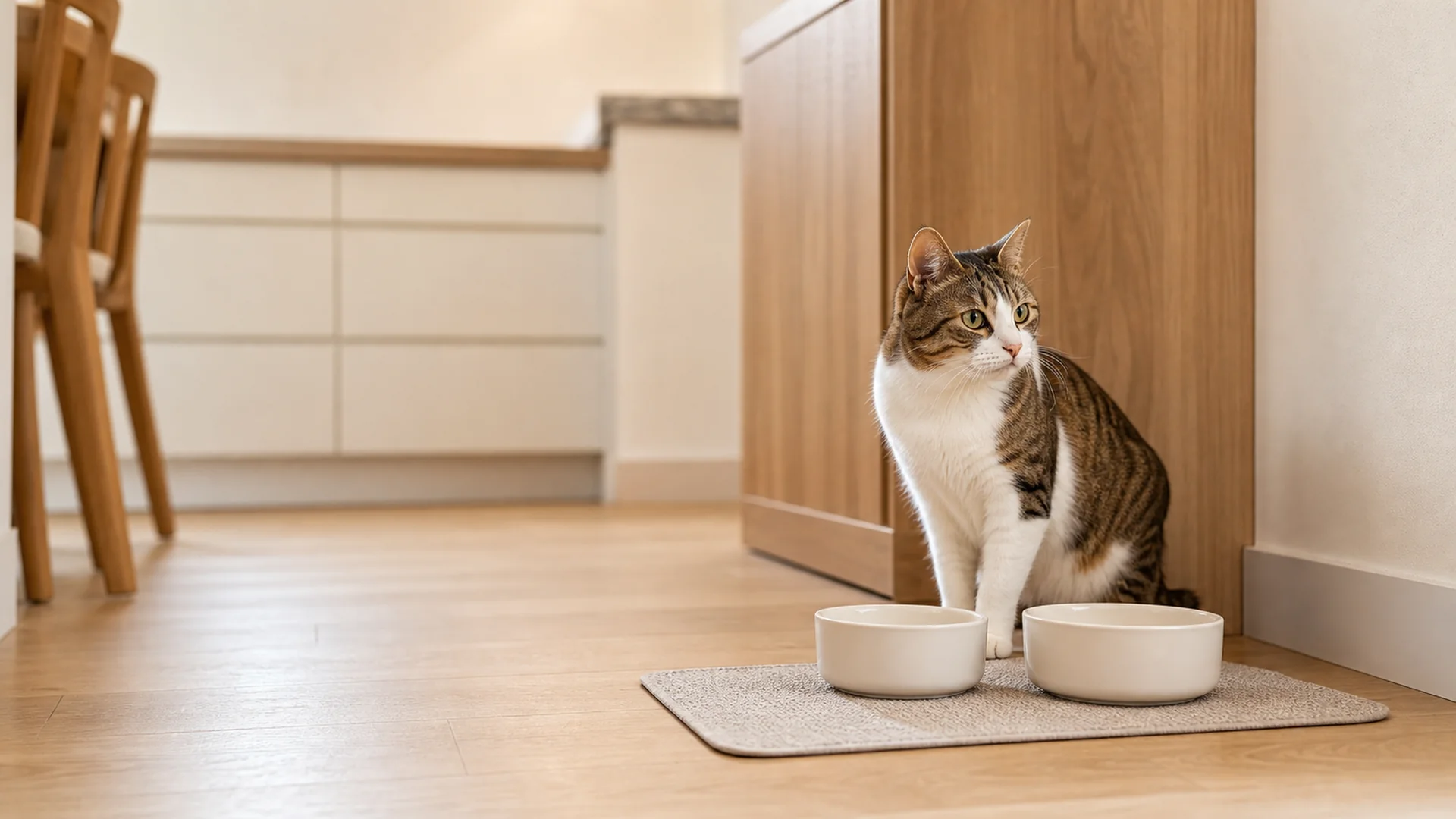
Quick answer
Automatic feeders can be good for indoor cats when they solve a real timing or portioning problem, work with the correct food type, and remain part of a monitored daily routine. They are a poor fit when wet food, medication, appetite changes, food stealing, or close observation make manual feeding more important.
- Best for predictable dry-food schedules.
- Helpful for measured meals during work hours or early mornings.
- Less suitable when appetite or health needs close monitoring.
- A hybrid routine is often safer than automating every meal.
When automatic feeders help indoor cats
They help when meal timing is the problem
Automatic feeders are useful when the same meal is repeatedly late, too early, or difficult to serve during work hours.
- They can support early breakfasts without waking the household.
- They can release a measured workday meal on time.
- They reduce dependence on a perfectly consistent human schedule.
They can improve portion consistency
A feeder can make portions more repeatable, but only when the settings and total daily amount are appropriate.
- Use measured portions instead of filling the bowl by eye.
- Check whether each release matches the intended amount.
- Watch for food stealing in homes with more than one cat.
They are strongest with compatible dry food
Standard hopper feeders are usually designed around dry food that flows consistently through the mechanism.
- Confirm the supported kibble size and food type.
- Do not place wet food in a dry-food hopper.
- Use a dedicated wet-food feeder when timed wet meals are necessary.
They still require daily monitoring
A feeder can dispense food without proving that your cat ate it, felt well, or had equal access.
- Inspect the bowl and leftovers every day.
- Confirm the device actually dispensed the meal.
- Notice changes in appetite, behavior, or vomiting.
Apartment setup matters
The best feeder is one that fits a calm, dry, easy-to-clean area without creating noise, clutter, or food-access problems.
- Keep it away from the litter box.
- Leave enough room for the cat to approach comfortably.
- Use a washable mat and protect cords from chewing.
A hybrid routine often works best
Many indoor-cat households benefit from automating one meal while keeping another meal manual.
- Automatic dry breakfast and manual wet dinner.
- Timed snack with supervised main meals.
- Automation for consistency and manual feeding for observation.
When an automatic feeder may be the wrong tool
Automatic feeders do not diagnose appetite changes, prevent food stealing, guarantee that a meal was eaten, or replace care during travel. They also cannot turn a standard dry-food hopper into a safe wet-food feeder.
Manual feeding or a more specialized setup is often better when your cat needs medication with food, follows a prescription diet, eats wet food, has a changing appetite, or shares the home with another cat that steals meals.
Automatic feeder FAQ for indoor cats
Are automatic feeders good for indoor cats?
They can be very useful when they solve a clear schedule or portioning problem and match the cat's food type and behavior. They are not automatically better than manual feeding and should not replace daily observation.
Can an automatic feeder help a cat that begs for food?
It may reduce the connection between the owner and a specific meal time, but begging can also come from habit, boredom, competition, or health and diet concerns. A feeder should be one part of the routine, not the only response.
Are automatic feeders good for wet food?
Only models specifically designed for wet food should be used for timed wet meals. These feeders require more attention to cleaning, freshness, room conditions, and leftovers than standard dry-food hoppers.
Can two cats share one automatic feeder?
They can share only when both cats have fair access and eat calmly. A faster or more confident cat may take both portions, so separate stations, supervision, or protected access may be necessary.
Can I rely on an automatic feeder while traveling?
A feeder can support meal timing, but it does not replace a responsible person who checks water, litter, appetite, health, and whether the device is operating correctly.
When is manual feeding better?
Manual feeding is often better when your cat eats wet food, takes medication with meals, follows a medical diet, has a changing appetite, or needs close monitoring during meals.
Final recommendation by household
Use an automatic feeder where it creates real consistency, and keep manual feeding where observation, flexibility, or food access matters more.
- For a healthy indoor cat with a predictable dry-food routine:An automatic feeder can be a useful daily tool.It adds timing consistency and repeatable portions when the device is checked and cleaned regularly.
- For wet food, medication, or changing appetite:Keep manual feeding as the primary routine.Direct observation and flexible meal preparation matter more in these situations.
- For most households trying automation for the first time:Start with one automated meal and keep the rest manual.This tests whether the feeder actually improves the routine without removing daily check-ins.
- For multi-cat homes with food stealing:Solve access and separation before focusing on convenience.A timed release does not guarantee that the intended cat receives the meal.